The World Bank has urged state governments to take greater responsibility for sustaining investments in immunisation, malaria prevention and primary healthcare, warning that inadequate funding and poor maintenance could reverse improvements recorded under Nigeria’s health intervention programmes.
The World Bank Country Representative, Matthew Verghis, made the appeal on Thursday during the Immunisation Plus and Malaria Progress by Accelerating Coverage and Transforming Services (IMPACT) End-of-Project Dissemination and Transition Forum, held as part of the 2026 Joint Annual Review of the health sector in Abuja.
Verghis said the IMPACT project had delivered measurable improvements in child survival, vaccination coverage, malaria prevention and primary healthcare infrastructure, but stressed that sustaining the achievements would require continued investment by federal and state governments.
He disclosed that under-five mortality declined from 132 to 110 deaths per 1,000 live births, surpassing the programme’s target of 112 deaths.
Malaria prevalence among children under five also dropped from 22 per cent to 15 per cent, while the proportion of fully vaccinated children aged 12 to 23 months increased from 31 per cent to 39.7 per cent.
According to him, quality-of-care scores in supported health facilities improved from 39.3 per cent to 50.2 per cent.
The World Bank representative said more than 2,600 primary healthcare facilities nationwide were upgraded to Level Two standards, with improvements covering electricity through solar installations, boreholes, staff quarters, additional service rooms, wards and medical equipment.
He added that the project procured and distributed more than 10 million long-lasting insecticidal mosquito nets, particularly targeting pregnant women and children under five.
On healthcare financing, Verghis disclosed that more than $20 million was transferred directly to primary healthcare facilities to address operational needs and support the implementation of the Basic Health Care Provision Fund.
He also said approximately $170 million was spent on routine vaccine procurement over four years, helping Nigeria meet its domestic co-financing obligations and access vaccine financing support from Gavi.
The intervention also addressed manpower shortages, with more than 15,000 health workers engaged and subsequently absorbed by state governments.
Verghis further disclosed that over 6,000 primary healthcare facilities received laptops, while medical records officers were trained to upload routine service-delivery information through the District Health Information Software 2 platform.
He said the project also supported Nigeria’s efforts towards vaccine security and self-reliance by strengthening the Presidential Vaccine Advisory Committee and contributing to the institutional foundations for domestic vaccine manufacturing.
On the transition from the IMPACT project, Verghis identified the Nigeria Health Sector Renewal Investment Initiative, its Sector-Wide Approach and the HOPE-PHC programme as frameworks for sustaining and expanding the achievements.
He said the HOPE-GOV programme would complement the intervention by strengthening financial and human resource management in primary healthcare and basic education.
Verghis emphasised that the sustainability of the investments would depend on ownership by federal institutions, state governments and local authorities, as well as adequate funding, maintenance of facilities and accountability for results.
Also speaking, the Executive Director of the National Primary Health Care Development Agency, Dr Muyi Aina, said the IMPACT project had contributed significantly to ongoing primary healthcare reforms, particularly in immunisation, malaria control and infrastructure development.
Aina disclosed that 16.6 million children had been fully immunised, according to the agency’s Primary Health Information System records.
He said the proportion of fully immunised children aged 12 to 23 months increased from 31 per cent to 39 per cent, based on the Nigeria Demographic and Health Survey.
On malaria prevention, Aina said prevalence declined from 22 per cent to 15 per cent between 2021 and 2025, while the proportion of pregnant women who received the recommended three doses of intermittent preventive treatment for malaria increased from 31 per cent to 33 per cent.
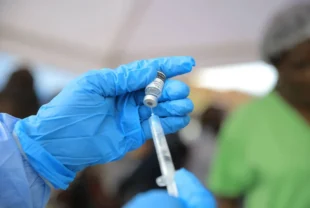
He added that the project funded more than 200 million doses of routine vaccines over three years and provided more than 3,000 solar-powered vaccine refrigerators to strengthen the country’s cold-chain system.
Aina further disclosed that 2,500 primary healthcare centres across 30 states and the Federal Capital Territory were upgraded to Level Two functionality.
He said an ultra-modern vaccine storage hub supported by the project in Lagos would serve more than 90 million Nigerians across the South-West and South-South regions.