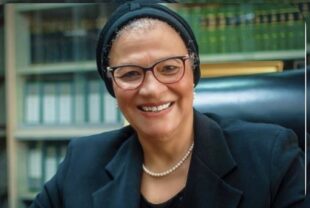

A Federal High Court sitting in Abuja has sentenced a 48-year-old man, Paul Okechukwu, to 20 years imprisonment after he pleaded guilty to membership in the proscribed Indigenous People of Biafra. Delivering judgment on Thursday, October 22, 2026, presiding judge Justice Hawa Yilwa held that the convict violated national counter-terrorism statutes establishing membership in illegal organizations as a punishable offense.
The court ordered that the prison term commence from the date of the convict’s initial arrest and directed that he undergo formal deradicalization and rehabilitation upon serving out his custodial sentence.
The judicial outcome followed an arraignment on a two-count charge preferred by the Federal Government against Okechukwu, an indigene of Nnewi South Local Government Area of Anambra State.
Count one of the indictment charged the defendant with maintaining membership in the outlawed group while residing in Imo State during 2021, an offense penalized under Section 16 of the Terrorism (Prevention) (Amendment) Act, 2013.
While the defendant admitted guilt on the membership charge, he entered a non-guilty plea to count two, which alleged participation in a violent incident resulting in the deaths of two security operatives.
Following an application submitted by the prosecution team representing the Attorney-General of the Federation, the court struck out the second count after it was formally withdrawn by the state. To satisfy statutory requirements for sentencing following a guilty plea, the prosecution presented a protected operative from the Department of State Services who testified under trial pseudonym “ABC”.
The witness detailed intelligence records confirming the convict’s active participation in organizational operations and unlawful activities across the South-East region.
Justice Yilwa emphasized that strict application of counter-terrorism legislation remains necessary to deter individuals from associating with unlawful groups that threaten national security and public peace.
The judge directed the Comptroller-General of the Nigerian Correctional Service to oversee the convict’s transfer to an appropriate maximum-security facility to serve out the term, alongside structured re-education programs designed to prepare him for eventual reintegration into society.
You Might Also Like