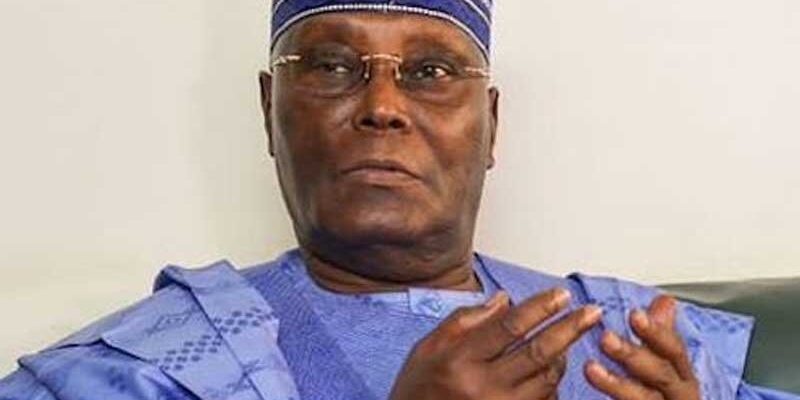
ABUJA — Former Vice President Atiku Abubakar has heavily criticized the Federal Government’s approved ₦70,000 monthly temporary transport allowance for public service workers, describing the intervention as a mere drop in the ocean that fails to address Nigeria’s worsening cost-of-living crisis.
In a statement issued in Abuja on Wednesday, October 28, 2026, through Phrank Shaibu, Director of Strategic Communication of his Presidential Campaign Council, Atiku argued that the policy is grossly inadequate given current economic realities.
The opposition leader stressed that with pump prices hovering around ₦1,400 per litre, the entire ₦70,000 package translates to roughly 50 litres of petrol, which offers no meaningful long-term relief to struggling families.
“At approximately ₦1,400 per litre, ₦70,000 would buy about 50 litres of petrol. What meaningful difference can 50 litres make over an entire month?” Atiku queried.
He questioned why the Federal Government singled out public sector employees while excluding millions of everyday Nigerians who bear the brunt of the harsh economic climate.
“The public workforce is only a fraction of Nigeria’s population. What happens to private sector workers, traders, small business owners, transport operators, and millions of Nigerians working in the informal sector? Does hardship end at the bus stop?” he asked.
The former Vice President accused the President Bola Ahmed Tinubu administration of resorting to temporary palliatives rather than addressing the structural causes of inflation, rising food costs, energy prices, and housing expenses.
“These rushed announcements smack of political bribery and corruption. Tinubu has shown no genuine intention of clearing the monumental mess caused by his hasty subsidy removal. He offers temporary payments instead of confronting the consequences,” Atiku alleged.
Highlighting alternatives to the current approach, Atiku called for a transparently managed production subsidy on petroleum products refined within Nigeria to directly crash pump prices across filling stations nationwide.
“₦70,000 may help with transport, but it cannot explain why work, food, and running a business have become unaffordable. Nigerians need lasting relief, decent wages, and an economy that rewards honest work. When will life become affordable again?” he concluded.
You Might Also Like