ABUJA, Nigeria — Nearly nine million vulnerable Nigerians—specifically 8.9 million direct beneficiaries, including 4.1 million women and 4.5 million farmers—are set to receive targeted economic relief following the World Bank’s approval of an additional $500 million NG-CARES financing facility for Nigeria.
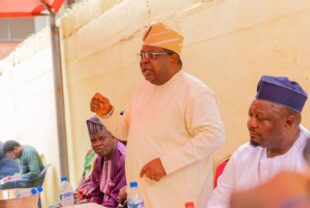
The Minister of Budget and Economic Planning, Senator Abubakar Bagudu, disclosed the development on Monday, November 16, 2026, in Abuja during a high-level technical meeting with state coordinators and officials implementing the Nigeria Community Action for Resilience and Economic Stimulus (NG-CARES) programme.
With the fresh $500 million injection—of which $490 million is earmarked directly for participating states and the Federal Capital Territory (FCT)—the World Bank’s cumulative financial commitment to the social protection and livelihood initiative now stands at $1.25 billion, building on its initial $750 million credit.
Addressing state representatives at the technical session, Senator Bagudu urged subnational governments to maximize the additional $500 million NG-CARES allocation to cushion low-income households, smallholder farmers, and micro-enterprises against the short-term pressures of ongoing economic reforms.
He emphasized that strategic deployment of the funds at the grassroots level could also crowd in private-sector capital and accelerate Nigeria’s broader ambition of building a $1 trillion economy. Citing cassava farming clusters in Enugu State as a practical success story, the minister illustrated how structured agricultural grants directly raise local productivity and household incomes.
Senator Bagudu further encouraged state implementation teams to use the technical engagement to resolve operational bottlenecks and clarify disbursement procedures so that funds reach verified beneficiaries without bureaucratic delays.
Strong State Participation and Prior Track Record
Also speaking at the event, the Minister of State for Budget and Economic Planning, Dr. Doris Uzoka-Anite, commended the World Bank for sustaining its partnership with Nigeria, noting that the measurable impact recorded during the first phase justified expanding the intervention.
“The programme has demonstrated significant results at the state level,” Dr. Uzoka-Anite stated, acknowledging the commitment of state governors, commissioners, and technical coordinators while urging them to uphold strict accountability standards during the next phase.
Providing an operational update on readiness across the federation, the Permanent Secretary of the Ministry of Budget and Economic Planning, Dr. Deborah Odoh, revealed that 35 states and the FCT have formally signed on to the additional financing phase. Out of that number, 33 states have already submitted their eligibility documents for final verification and clearance.
Dr. Odoh noted that the original phase of the programme delivered tangible results nationwide, reaching more than 17.6 million direct beneficiaries across social safety nets, agricultural value chains, and small-business recovery grants. She added that the expanded phase—which was formally inaugurated by President Bola Ahmed Tinubu in July 2026—will deepen state ownership, strengthen social registries, and entrench transparent delivery mechanisms.
How NG-CARES Supports Grassroots Resilience
Originally conceived to mitigate the socio-economic disruptions triggered by the COVID-19 pandemic, NG-CARES operates through a results-based financing model. Under this framework, state governments and the FCT utilize existing local delivery platforms to disburse cash transfers, farm inputs, basic community infrastructure, and operational grants to nano and micro-enterprises, subsequently receiving reimbursements upon independent verification of results.
Development economists observe that focusing nearly half of the new 8.9 million beneficiary target on women and rural farmers directly addresses food security and household vulnerability across Nigeria’s 36 states, offering a vital buffer for families navigating high living costs.