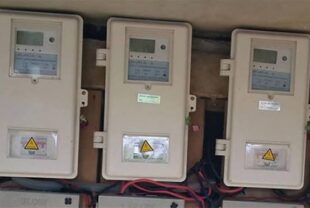

The Federal Government has announced plans to improve electricity supply within the next 48 to 72 hours, following prolonged outages linked to reduced power generation, gas supply constraints and damage to critical transmission infrastructure.
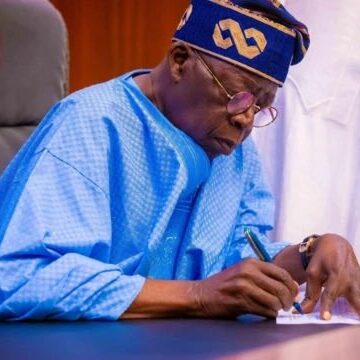
The Minister of Power, Joseph Tegbe, gave the assurance on Saturday, November 7, 2026, saying efforts were underway to restore affected generating units and address operational challenges disrupting electricity supply in parts of the country.
In a statement titled Update on Power Situation, published on his Facebook page, Tegbe said scheduled maintenance at Egbin Power Station in Lagos, alongside inadequate gas supply to some thermal power plants, had reduced the volume of electricity available on the national grid.
Egbin Power Station, which the Minister described as Nigeria’s largest thermal power generating facility, accounts for approximately 16 per cent of electricity supplied to the national grid.
He explained that the reduction in generation had forced grid operators to introduce load shedding in some locations to manage the available electricity.
Tegbe also identified damage to critical transmission lines as another factor affecting supply, particularly in Lagos, where the disruption has limited alternative routes for delivering electricity.
“My team and I are working to return the affected generating units to service in phases, with the first units coming back online within the next 48 to 72 hours,” the Minister said.
He added that the government was engaging relevant operators to improve gas availability and accelerate repairs to damaged transmission infrastructure.
The Minister acknowledged the difficulties faced by households and businesses in four affected states, including Lagos and the Federal Capital Territory, assuring consumers that the government was working to address the situation.
Meanwhile, the electricity crisis has triggered a disagreement between the Transmission Company of Nigeria (TCN) and Ikeja Electric over the causes of recent supply interruptions.
TCN rejected Ikeja Electric’s explanation that grid instability was responsible for outages recorded on November 3 and 4, attributing the decline in available electricity mainly to inadequate gas supply to thermal plants and reduced hydroelectric generation.
The transmission company maintained that it could only transmit electricity generated and made available to the national grid.
According to TCN, 68 per cent of interruptions recorded on feeders supplying Ikeja Electric resulted from load shedding associated with low generation, while another 26 per cent were linked to distribution-related issues, including alleged non-compliance with allocated load limits, faults and maintenance.
The remaining six per cent, it said, resulted from planned maintenance, switching operations and transmission line limitations.
The development followed an apology by Ikeja Electric to customers on some Band A feeders after it failed to meet the minimum daily supply requirement of 20 hours on November 3 and 4.
As restoration efforts continue, electricity consumers will be watching closely to see whether the Minister’s 72-hour timeline translates into improved supply and more reliable service.