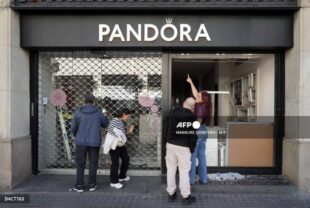
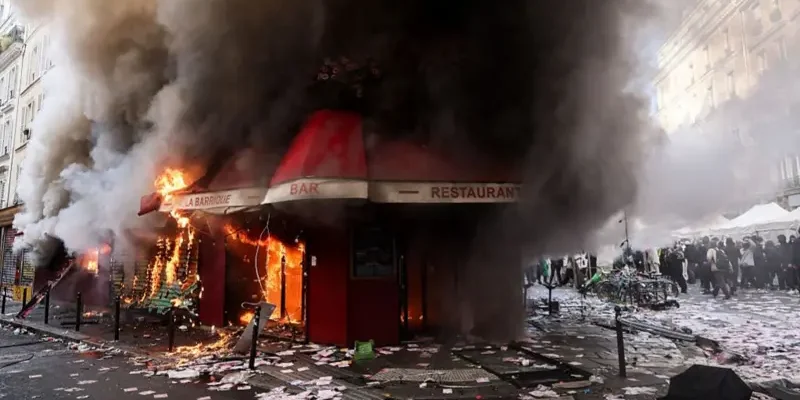
PARIS — Widespread unrest erupted across France on Saturday as an estimated 550,000 people took to the streets to demonstrate against soaring living costs and declining purchasing power, culminating in violent clashes, widespread arson, and nearly 400 arrests nationwide.
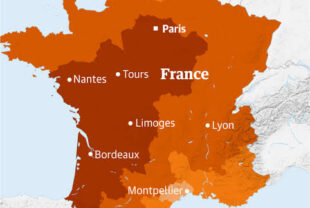
The nationwide action, organized in response to mounting economic pressures and inequality, saw major demonstrations in key cities including Paris, Marseille, Lyon, and Limoges. While trade union representatives estimated turnout closer to 800,000, official figures released by the Interior Ministry confirmed significant participation across multiple regions.
Tensions escalated significantly in several urban centers as splinter groups confronted security forces. In Paris, riot police deployed tear gas and water cannons at Place de la République to disperse crowds after demonstrators erected barricades and lit fires.
In Marseille, masked individuals stormed the local city hall, while demonstrators in Lyon set fire to a tourist information office, impeding firefighters from reaching the blaze. Meanwhile, in Limoges, part of the town hall was damaged in a suspected arson attack following a break-in.
Addressing reporters following the unrest, French Interior Minister Laurent Nuñez confirmed that law enforcement agencies made approximately 400 arrests nationwide. He attributed much of the destruction and opportunistic looting to hard-left agitators and radicalized factions.
“Those who have broken, attacked prefectures as well as businesses, and looted even our town halls will be prosecuted and punished without exception,” French President Emmanuel Macron stated, warning that there is no place for violence in civil demonstration.
Casualties were also reported during the clashes, including a protester in Saint-Étienne who suffered severe hand trauma due to explosive fireworks or crowd-control devices, according to local officials.
The wave of demonstrations—which initially grew out of localized student protests over education conditions and public services—has rapidly expanded into a broader public challenge against government spending policies and persistent inflation.
You Might Also Like