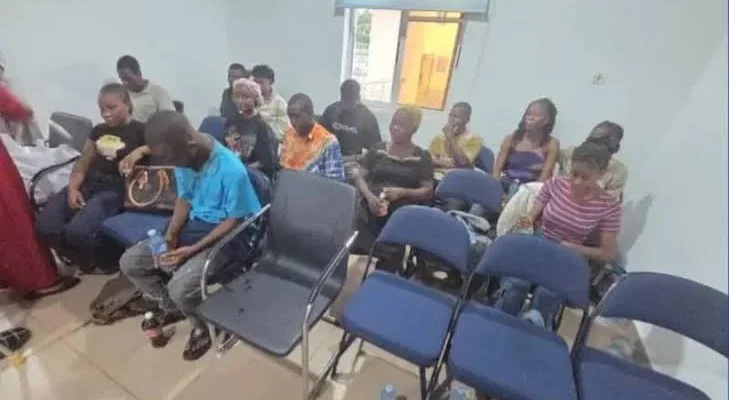
Authorities handling the National Youth Service Corps (NYSC) have extended a concession to the twenty prospective corps members who recently regained their freedom after an abduction in Imo State, allowing them to select any state within the Southwestern region to complete their mandatory one-year service program.
The decision follows their ordeal on October 1 along the Owerri-Onitsha transit corridor in Mbaitoli Local Government Area, where heavily armed gunmen intercepted two commercial buses conveying them to their initial orientation postings in Abia and Akwa Ibom states.
Following the interception, the criminal gang demanded an astronomical sum of 50 million Naira for each victim, plunging affected households into intense distress as they scrambled to secure their relatives’ release.
Controversy, however, continues to surround the operational circumstances of their release on Wednesday.
While official statements from law enforcement leadership attributed the rescue of the victims in Owerri West to coordinated pressure applied by security operatives, several family members of the survivors publicly countered those claims, asserting that substantial ransom payments—totaling up to six million Naira per person—were pooled from relatives and well-wishers to secure their freedom.
The traumatic incident has exacted a heavy physical and emotional toll on both the young graduates and their families, with some survivors and parents requiring immediate hospital admission for stress-induced health complications.
Despite the trauma, several affected youths voiced profound relief over surviving the life-threatening ordeal, preferring to focus on recovery rather than dwelling on the experience.
Meanwhile, the abduction has re-ignited widespread public debate concerning the security framework of the national service scheme.
Driven by mounting safety risks on major inter-state highways, numerous parents, civil society advocates, and former corps members are calling for systemic reforms, with several urging the authorities to temporarily halt or completely restructure the mandatory deployment of young graduates across vulnerable regional transit routes.
You Might Also Like