By Mariam Ogeyemhe
For thirty-eight days, the primary economic artery connecting Nigeria’s South-South and South-East geopolitical zones hung in a state of quiet vulnerability.
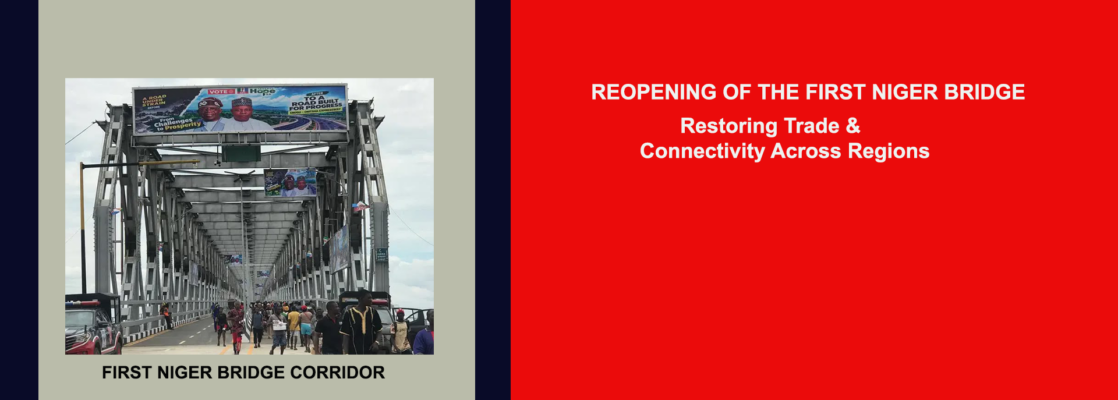
The emergency closure of the iconic First Niger Bridge on September 7, 2026, for urgent structural repairs sent ripples through regional logistics, forcing thousands of daily commuters, heavy haulage trucks, and local traders into tedious, costly detours. Today, as vehicular traffic surges once more across the sprawling steel expanse linking Asaba in Delta State to Onitsha in Anambra, the region breathes a collective sigh of relief.
The reopening of the bridge by the Federal Ministry of Works marks more than just the completion of an engineering project; it represents the restoration of a vital lifeline that sustains millions of livelihoods across the Niger Delta and Eastern commercial corridors.
A Critical Infrastructure Under Pressure
Constructed in the 1960s, the First Niger Bridge has long served as the flagship gateway for trade, social integration, and interstate transit between the oil-rich South-South and the commercial powerhouse of the South-East. However, decades of intense traffic loads—compounded by unauthorized structural modifications, vandalism of key steel members, and severe weather exposure—demanded a decisive, multi-million naira intervention.
Under the direct supervision of the Minister of Works, Senator Dave Umahi, federal engineering teams undertook comprehensive structural repairs. The scope of work extended beyond routine surface patching to address critical expansion joints, structural alignment, and load-bearing underpinnings.
Engineers attached to the project highlighted that high-density transport corridors require uncompromising structural integrity, noting that the volume of heavy freight crossing the bridge daily necessitated immediate, thorough intervention before long-term risk escalated.
Despite temporary delays caused by heavy seasonal downpours across the Niger Delta basin, final structural integrity tests and stress-load evaluations were completed prior to reopening the corridor to full traffic capacity.
Safety Upgrades & Modernization Efforts
To safeguard the aging infrastructure against future deterioration and unauthorized usage, the Federal Ministry of Works incorporated several modern safety upgrades into the project scope:
- Reinforced Median Separators: Installed along the entire bridge span to prevent lane-cutting and minimize head-on vehicular collisions during peak travel hours.
- Turnaround Infrastructure: Three strategically constructed turnaround points to manage traffic flow and facilitate swift emergency responses.
- Solar-Powered Illumination: High-intensity solar streetlights fitted across the bridge deck to enhance night visibility and deter criminal activity.
- Surveillance Equipment: Digital monitoring systems deployed to track heavy vehicle compliance and protect critical steel structures against vandalism.
Human Impact: Relief for Transporters, Traders, and Local Markets
For the thousands of interstate transport operators, logistics firms, and market traders who depend on seamless transit across the Niger River, the thirty-eight days of restricted access were marked by rising operational costs and lost productivity. Alternative routes added hours to journey times, spiking fuel consumption for haulage drivers carrying perishable agricultural goods, industrial machinery, and petroleum products.
According to market associations in Onitsha and transport union representatives along the Asaba corridor, supply chains have begun stabilizing rapidly following the bridge reopening. Traders report that reduced transit delays between port terminals in Delta State and distribution hubs in Anambra State are helping ease logistics surcharges, offering immediate financial relief to weekend commuters, small businesses, and commercial operators alike.
Long-distance bus operators along the Benin-Asaba-Port Harcourt corridor have similarly resumed standard travel schedules, eliminating the temporary fare surcharges previously borne by weekend travelers and business commuters.
Looking Ahead: Strategic Vision for the Transit Corridor
While the restoration of the First Niger Bridge delivers immediate economic relief, federal authorities emphasize that long-term structural resilience remains the ultimate goal. The Ministry of Works has reaffirmed its commitment to progressing complementary arterial projects, including comprehensive upgrades along the broader Benin-Asaba-Onitsha dual carriageway and ongoing optimization of the Second Niger Bridge corridor to distribute heavy traffic loads evenly.
As weekend travel resumes across the Niger River, the restored bridge stands as a testament to the power of timely infrastructure maintenance in driving regional integration, boosting interstate commerce, and keeping the economic heart of the South-South and South-East beating strong.
You Might Also Like