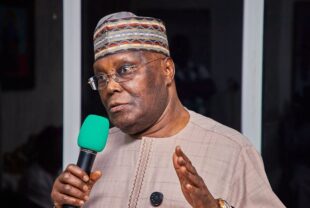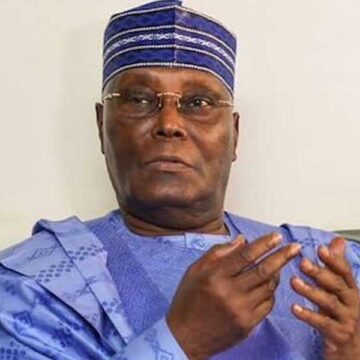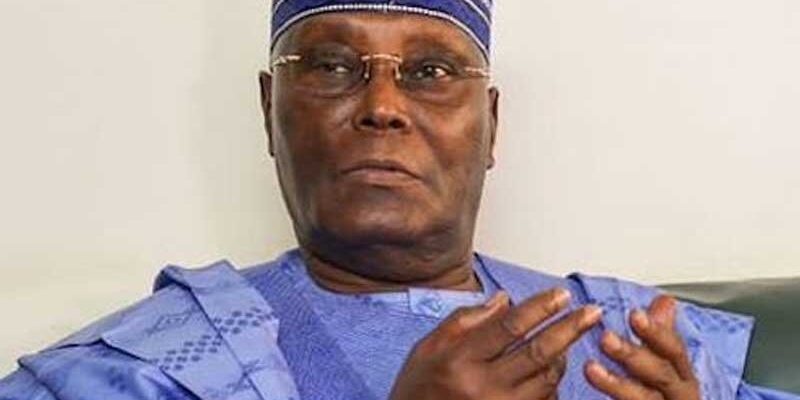
Former Vice-President and presidential candidate of the African Democratic Congress (ADC), Atiku Abubakar, has promised to continue petroleum exploration at the Kolmani oil field, located along the Bauchi-Gombe border, if elected president in the 2027 general elections.
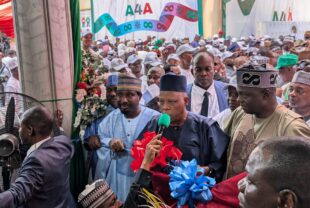
Atiku made the promise on Saturday, November 14, during the ADC presidential campaign rally at the Sir Abubakar Tafawa Balewa Stadium in Bauchi State, where he outlined some of his proposed economic and security priorities for the country.
The former vice-president also pledged to restore petroleum and electricity subsidies, strengthen security in the North-East and complete the long-delayed Mambilla Hydroelectric Power Project in Taraba State.
Speaking to supporters, Atiku said his administration would sustain petroleum exploration in the Kolmani area to provide Nigeria with an additional source of revenue.
“I also promise that I will continue the exploitation of petroleum in Kolmani so that we will have an additional source of revenue,” he said.
He argued that developing the oil field would expand the country’s revenue base and create additional economic opportunities for the North-East region.
Atiku also renewed his promise to restore petroleum subsidy, saying government intervention would be extended to electricity costs as part of efforts to address the economic difficulties confronting Nigerians.
The ADC candidate urged Bauchi residents to support the party’s candidates across elective positions, while calling on voters to protect their ballots by ensuring that votes are counted and results transmitted before leaving their polling units.
Kolmani oil project and its troubled journey
Atiku’s promise comes amid renewed attention on the Kolmani Integrated Development Project, an ambitious petroleum venture expected to open a new frontier for oil and gas production outside Nigeria’s traditional Niger Delta region.
The project is situated within the Kolmani River area, along the boundary between Bauchi and Gombe states, in the Gongola Basin of the Upper Benue Trough.
Former President Muhammadu Buhari officially flagged off the project on November 22, 2022, describing the discovery as a major breakthrough in the country’s efforts to expand petroleum exploration beyond the Niger Delta.
The project covers Oil Prospecting Licences 809 and 810 and was presented as an integrated development initiative involving crude oil production, refining, gas processing, electricity generation and fertiliser manufacturing.
At the inauguration, the Buhari administration announced that the project had attracted investments estimated at more than $3 billion through the Nigerian National Petroleum Company Limited (NNPCL) and its partners.
The initial development plan included an in-situ refinery with a proposed capacity of up to 120,000 barrels per day, a gas processing facility capable of handling 500 million standard cubic feet daily, a 300-megawatt power plant and a fertiliser facility with a production capacity of 2,500 tonnes per day.
The project was expected to stimulate economic activities in the North-East, create employment, attract private investment and increase government revenue.
The discovery was particularly significant because it offered the possibility of developing another petroleum-producing region in a country whose oil industry has historically been concentrated in the Niger Delta.
However, the ambitious expectations surrounding the project have not translated into commercial production.
Why Kolmani has remained stalled
Despite its high-profile inauguration, the Kolmani project has experienced significant delays, with exploration and development activities failing to progress at the pace originally anticipated.
In January 2025, reports by Punch highlighted disagreements between the NNPCL and officials of the Bauchi and Gombe state governments over the level of progress at the site.
While officials from the two states expressed concerns about the apparent lack of substantial activities, the NNPCL maintained that it had not abandoned exploration in the northern region.
In July 2025, an NNPCL director, Yusuf Usman, disclosed that the company had drilled four wells in the Kolmani area and was evaluating the appropriate technology for the next phase of drilling operations.
Nevertheless, activities subsequently experienced further delays.
In August 2026, the Bauchi State Government called for the resumption of exploration activities after the operating technical contractor reportedly demobilised from the site.
The state’s Commissioner for Natural Resources, Muhammad Maiwada, made the appeal during a visit by officials of the Revenue Mobilisation Allocation and Fiscal Commission (RMAFC).
The RMAFC delegation, led by its chairman, Muhammad Shehu, inspected the project and expressed concern about the delay.
Shehu said the commission would communicate its findings to the Federal Government and recommend measures to remobilise the project.
He maintained that the development of the oil field would benefit the Federation, Bauchi and Gombe states, the wider North-East region and host communities.
The August intervention demonstrated that the project remained a priority for stakeholders despite the prolonged delays.
It also provided an important backdrop to Atiku’s latest campaign promise, as the former vice-president seeks to convince voters in the region that an ADC administration would give the project the attention required to move it forward.
Atiku promises to restore petroleum and electricity subsidies
Beyond the Kolmani oil project, Atiku used the Bauchi rally to restate his position on petroleum and electricity subsidies, two major economic issues that have remained at the centre of public debate since the removal of petrol subsidies in May 2023.
President Bola Tinubu announced the removal of the longstanding petrol subsidy during his inauguration on May 29, 2023, a decision that subsequently contributed to significant changes in fuel prices and transportation costs.
The Federal Government defended the policy as necessary to reduce pressure on public finances, eliminate alleged inefficiencies in the subsidy system and redirect government resources towards infrastructure and other development priorities.
However, the decision triggered widespread economic concerns as households and businesses faced higher transportation, food distribution and operating costs.
Atiku said he would reverse the policy if elected, promising to restore petroleum subsidy and extend government support to electricity consumers.
“I have already promised all Nigerians that I will restore the petroleum subsidy. Not only that, I will also restore subsidy in power, electricity power,” he told supporters.
The promise represents a major policy contrast with the Tinubu administration’s economic reform programme.
However, the ADC candidate did not provide a detailed explanation of how the proposed subsidies would be financed, the structure of the intervention or the safeguards that would prevent the abuses associated with previous subsidy arrangements.
The financial implications of restoring both subsidies are likely to become important issues in the debate over his economic programme as the 2027 elections approach.
Mambilla project also features in Atiku’s campaign promises
Atiku also promised to revive the Mambilla Hydroelectric Power Project in Taraba State, another major infrastructure initiative that has remained incomplete despite decades of planning.
The proposed hydroelectric project is designed to generate approximately 3,050 megawatts of electricity when completed, making it one of Nigeria’s largest planned power generation facilities.
Its development has suffered repeated delays associated with financing challenges, contractual disagreements and legal disputes.
Atiku said an ADC-led government would ensure that the project receives the necessary attention to move towards completion.
The promise reflects his broader campaign message of addressing infrastructure deficits and expanding economic opportunities across the North-East.
Together with the Kolmani oil project, Mambilla represents two major development initiatives that successive administrations have struggled to deliver.
Calls on Bauchi voters to protect their votes
During the rally, Atiku also appealed to residents of Bauchi State to support ADC candidates across all elective positions in the 2027 elections.
He expressed appreciation for the electoral support he had received from the state in previous presidential contests, describing Bauchi as one of the states that had consistently supported his political ambition.
The former vice-president urged voters to turn out in large numbers and remain at their polling units to ensure that their votes were properly counted and results transmitted.
He said the protection of electoral mandates was essential to safeguarding democratic rights.
The Bauchi rally forms part of the ADC’s campaign activities ahead of the 2027 general elections, as political parties intensify efforts to mobilise support across the country.
Kolmani promises face delivery test
Although Atiku’s pledge has renewed political attention on the Kolmani project, its eventual success will depend on more than campaign promises.
The project requires sustained investment, technical expertise, effective coordination among government institutions and private-sector partners, as well as a clear strategy for overcoming the operational challenges that have delayed development.
For communities in Bauchi and Gombe, the expectations surrounding Kolmani extend beyond petroleum production.
Residents have anticipated employment opportunities, improved infrastructure, increased economic activities and development projects that could transform communities around the oil field.
The prolonged delay has therefore raised questions about when those expectations will translate into tangible benefits.
Atiku’s promise to continue petroleum exploitation at Kolmani places the project among the issues likely to feature prominently in the 2027 presidential campaign.
However, voters will be looking beyond political assurances to determine how competing candidates intend to overcome the challenges that have prevented the project from achieving its original objectives.
For Nigeria, the successful development of Kolmani could expand the country’s petroleum resource base and create another avenue for revenue generation.
For Bauchi and Gombe, it could represent a major opportunity for economic transformation.
Whether the project eventually fulfils those expectations will depend on the ability of the next administration to translate years of planning and political commitments into sustained exploration, development and commercial production.