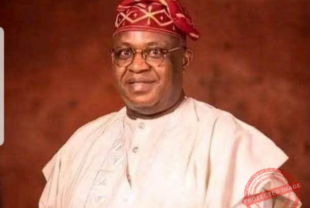
ABUJA — Former Minister of Works and Housing and ex-Governor of Lagos State, Babatunde Fashola, SAN, has challenged opposition political parties and presidential aspirants ahead of the 2027 general elections to openly declare whether they would scrap the Nigerian Education Loan Fund (NELFUND) if voted into power, asserting that millions of benefiting students and parents would fiercely resist any attempt to dismantle the scheme.
Fashola issued the challenge on Tuesday, November 17, 2026, while defending the economic and social intervention policies of President Bola Ahmed Tinubu’s administration. According to the former governor, the student loan programme has become an indispensable financial lifeline for Nigerian households navigating global and domestic cost-of-living pressures, making it politically untouchable for critics of the administration.
Speaking on Channels Television’s Politics Today on the growing reach of the scheme—which has already disbursed hundreds of billions of naira to over one million tertiary institution students nationwide—Fashola dared opposition figures to include the cancellation of NELFUND in their 2027 campaign manifestos. He argued that candidates criticizing the government’s reforms avoid proposing alternatives to the student loan initiative because they recognize the inevitable electoral and public revolt from students and their families.
“I challenge the opponents to come and say they are going to cancel NELFUND and see how the people and the students who are benefiting from it and the families will vote. I know they won’t dare to,” Fashola declared.
Explaining the economic rationale behind the establishment of NELFUND, the Senior Advocate of Nigeria noted that household disposable income across the country is heavily strained by essential expenses such as housing rent, transportation, healthcare, and tuition fees. Rather than leaving parents to shoulder university and polytechnic charges entirely out of pocket, the federal government designed NELFUND to cover institutional fees directly while providing monthly upkeep stipends to eligible students.
“Your disposable income goes to rent, transport, healthcare and your children’s education. NELFUND was, ‘we will help families in need to pay school fees. Instead of dipping money out of their pockets to pay, we will give that support,’” Fashola explained.
Beyond the education loan scheme, Fashola placed Nigeria’s inflationary pressures within a broader international context, pointing out that post-COVID-19 supply chain disruptions, the Russia-Ukraine conflict, and ongoing geopolitical crises in the Middle East have driven up living costs globally. “There’s no need denying the fact that the cost-of-living challenge is now a global challenge, and anybody who is right-thinking will concede that,” he stated.
He highlighted complementary fiscal and welfare measures rolled out by the Tinubu administration—including the upward review of the national minimum wage and comprehensive tax reforms that consolidated eight overlapping tax laws into four—as targeted steps to protect citizens’ purchasing power. At the same time, Fashola cautioned against populist calls for indiscriminate cash handouts or fuel subsidy reversals, warning that injecting excessive liquidity into the economy without corresponding production growth would trigger severe inflation.
“Every economist worth his salt will tell you that you can’t throw cash at all of the problem all the time. Otherwise, you create hyper-demand inflation,” he warned.
Fashola further linked the continuity of NELFUND and flagship infrastructure projects—such as the Lagos-Calabar Coastal Highway and the Sokoto-Badagry Superhighway—to the need for policy stability ahead of 2027, urging Nigerians to allow President Tinubu to complete his reform agenda. “Let President Tinubu finish what he started. That is why he deserves a second term,” he added, while also appealing for respect for Nigeria’s rotational power-sharing convention between the North and the South.