ABUJA — The Federal Government of Nigeria and the People’s Republic of China have signed a bilateral grant agreement worth RMB 200 million (approximately $30 million) to support community-focused development projects across the country.
According to an official statement issued by the Ministry of Budget and Economic Planning on Sunday, the agreement reinforces the longstanding strategic partnership between the two nations and aims to address critical socio-economic challenges at the local level.
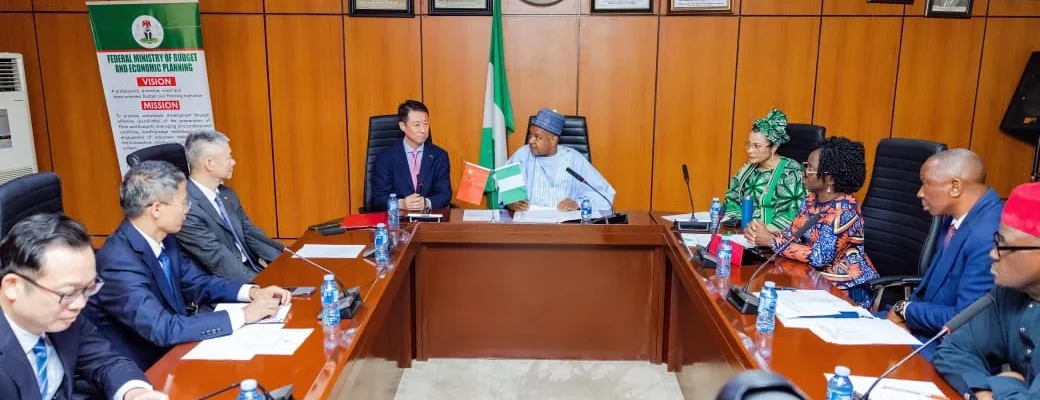
The agreement signing took place at the Ministry of Budget and Economic Planning in Abuja, involving Nigeria’s Minister of Budget and Economic Planning, Senator Abubakar Bagudu, and the Chinese Ambassador to Nigeria, Yu Dunhai.
Ministry officials noted that the RMB 200 million grant will be deployed toward low-cost, high-impact development initiatives aimed at improving living conditions, enhancing community infrastructure, and supporting local poverty reduction efforts across Nigerian states. Speaking at the signing ceremony, Minister Bagudu emphasized that the partnership would support Nigeria’s development priorities through targeted investments, knowledge exchange, and institutional cooperation.
He explained that the ministry was actively working with the Nigeria–China Strategic Partnership Office to develop projects proposed by state governments to address specific community needs.
Bagudu underscored the government’s commitment to ensuring these bilateral commitments translate into practical, tangible benefits for citizens on the ground rather than remaining commitments on paper.
Chinese Ambassador Yu Dunhai noted that the grant specifically funds “small but beautiful” community ventures that require modest capital outlay while delivering rapid, direct improvements to citizen livelihoods.
The development pact comes amid expanding economic engagement between the two nations, with bilateral trade reaching $18 billion during the first half of 2026, supported by preferential trade access including China’s zero-tariff policy for eligible Nigerian exports.
You Might Also Like