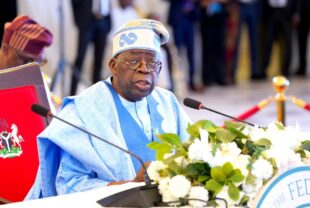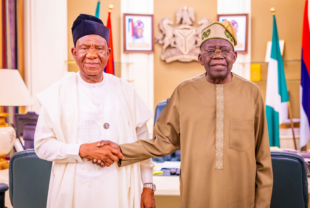
President Bola Tinubu has stated that the latest economic assessment by the World Bank serves as clear validation that his administration’s tough macroeconomic adjustments are steering the country toward long-term financial stability.
Reacting to the findings in the newly released World Bank Development Update, the President pointed out that national poverty levels have stabilized for the first time since 2019, with economic projections anticipating a steady drop as output begins to outpace population growth.
The international lending institution highlighted major structural policy changes—most notably the deregulation of petrol prices and the harmonization of foreign exchange rates—for boosting federal revenues and strengthening public finances.
According to the report, expanded revenue generation enabled sub-national governments to significantly scale up capital investments, directing increased allocations into vital public projects such as road network development, energy infrastructure, agricultural support, and housing schemes.
Key indicators highlighted in the document also demonstrated a gradual cooling of domestic inflationary pressures alongside a solid boost in external financial reserves. National debt sustainability metrics also reflected a healthier trend across both federal and state levels, reassuring global investors and local stakeholders of the country’s improving fiscal outlook.
Responding to the assessment, President Tinubu expressed confidence in the ongoing implementation of the Renewed Hope Agenda, promising that upcoming government initiatives will focus heavily on driving down food prices, generating quality job opportunities, and extending social cushions to vulnerable households.
He commended state executives for maintaining reform momentum and urged sub-national leadership to continuously channel their increased monthly allocations toward grassroots development and direct citizen relief.
You Might Also Like