President Bola Ahmed Tinubu has officially forwarded key executive bills to the Senate, seeking comprehensive legal amendments to overhaul the National Drug Law Enforcement Agency (NDLEA) and expand the mandate of the Nigerian Safety Investigation Bureau (NSIB).
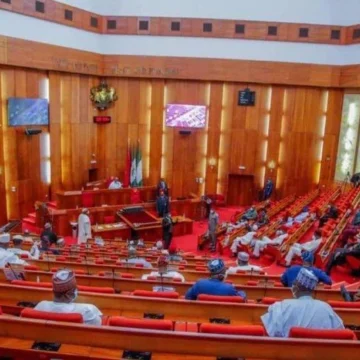
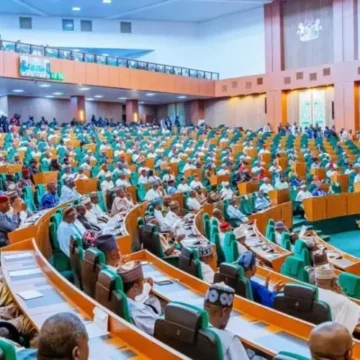
The presidential communication, read on the floor of the red chamber by Senate President Godswill Akpabio, requests the National Assembly to consider and pass the proposed legislative frameworks pursuant to Section 58(2) of the 1999 Constitution (as amended).
Under the proposed NDLEA amendment, the federal government aims to establish a consolidated statutory framework for anti-narcotics law enforcement across the country. The bill seeks to boost the agency’s operational capacity, enabling deeper financial tracing, asset forfeiture powers, and enhanced intelligence operations against organized drug cartels.
Similarly, the proposed NSIB Amendment Bill seeks to restructure the bureau into an overarching independent safety authority across all transport sectors—multimodal transit, rail, maritime, and aviation. The bill also proposes transferring the administrative and supervisory oversight of the investigation bureau directly under the Presidency to ensure operational autonomy.
Alongside the NDLEA and NSIB proposals, President Tinubu transmitted the National School of Government Bill, which seeks to repeal the Administrative Staff College of Nigeria (ASCON) Act to establish a centralized center for public sector capacity building.
Furthermore, an executive bill seeking the domestic statutory adoption of the four 1949 Geneva Conventions, their Additional Protocols, and the Rome Statute of the International Criminal Court was submitted to strengthen Nigeria’s legal response to war crimes, humanitarian law violations, and international offenses.
Following the formal reading of the executive letters, Senate President Godswill Akpabio referred the legislative draft proposals to the Senate Committee on Rules and Business for detailed scheduling and committee review.
The bills are expected to move through second reading debates in the coming days, after which they will undergo public hearings before relevant standing committees.
You Might Also Like